Curtains: Buying Guide
A few years ago, we offered you an article dedicated to choosing your curtains. Today, we present the complete curtain guide: from the pole to the eyelets, including the ideal number of pleats. Embrin brings you its concise guide dedicated to linen curtains.
Are you familiar with Embrin linen curtains?
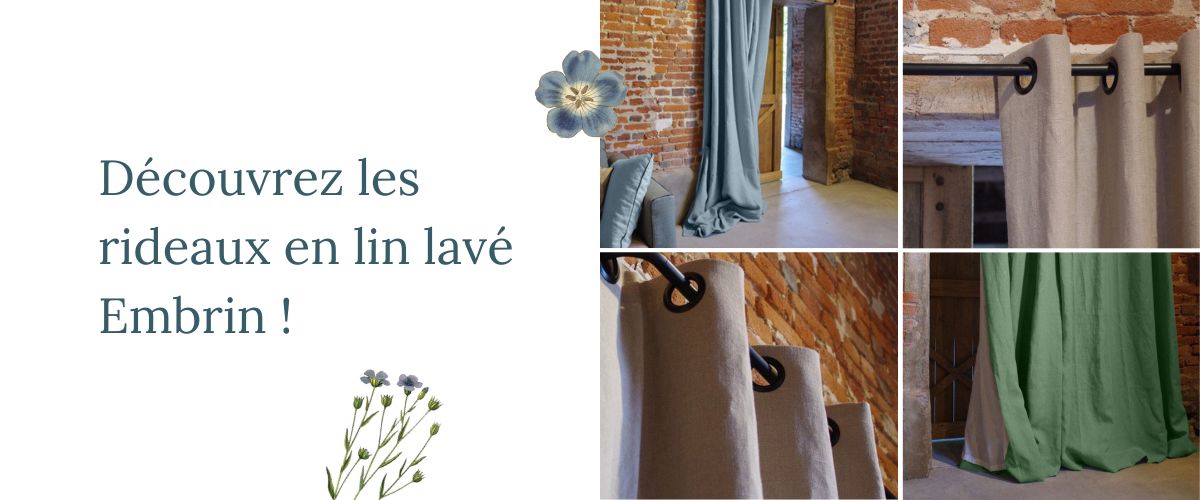
Before telling you more about choosing your curtains, discover the products offered by Embrin! Made entirely from linen, our curtains are made using a traditional method that respects both the land and people. Did you know? You can also personalise your linen curtains thanks to our online configurator. Colour, lining, dimensions... Design the curtains you’ve always wanted!
The curtain pole
An accessory, but an essential one, the curtain pole – or more precisely the curtain rod – is not always so easy to choose.
A curtain pole or a curtain track?
While the curtain pole is more common in our contemporary interiors, the curtain track brings a distinctive aesthetic touch to vintage interiors and sometimes even to ultra-modern ones.
The curtain track or railway pole
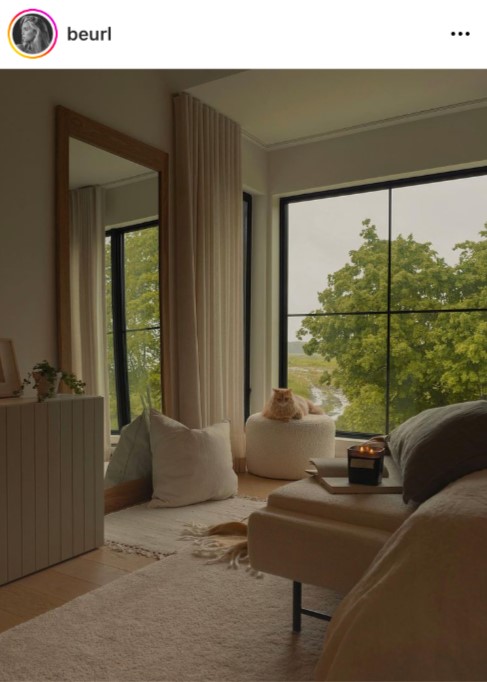
The curtain track is particularly appreciated for large windows with a significant ceiling height.
Although they belong to the dramatic world of theatre, they are also found in conference rooms as well as in Haussmann apartments or large contemporary villas, where they are fixed directly to the ceiling. Ideal for spaces with very tall windows (close to the ceiling), curtain tracks are suitable for all types of fabric, especially linen curtains.
Their advantages: easy installation and smooth drawing.
Photo: @beurl
The curtain pole
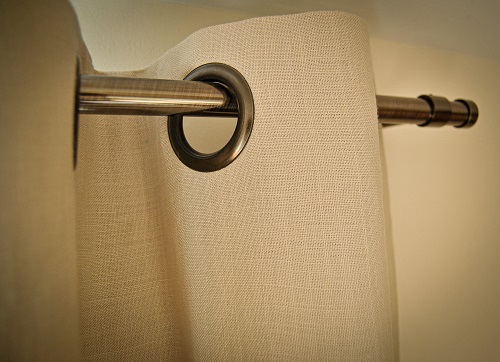
Much more widespread, the curtain pole is a classic in contemporary homes and flats. It blends into many different decorative and stylistic settings. Sometimes modern, sometimes rustic, the curtain pole stands out for its colour and its finials. These two elements give it its character and transform its style within a room.
Which colour curtain pole should you choose?
Stainless steel poles are particularly suited to modern décor, while copper poles work better with an industrial or rustic design. For a delicate and elegant atmosphere, opt for a rose gold pole, while black or white poles will suit absolutely any style of decoration. Cosier, English-style interiors will benefit from a raw or painted wooden pole to soften the room’s tones.
What diameter curtain pole should you choose?
The diameter of the curtain pole mainly depends on the weight of the curtains: a 16 mm pole is not sufficient for double velvet curtains. For unlined linen curtains, any pole will do. For lined linen curtains, it’s best to choose a pole of at least 28 mm. Finally, the larger the diameter of the pole, the more the window frame is dressed and the more it stands out in the room as a whole.
How many curtains can you hang on a pole?
In most homes, two curtains, or even one, are enough to dress a window frame, but some homes may require more. This is particularly the case in houses or flats with large picture windows. So, you may need to hang 3 or even 4 curtains on the same window frame. In this case, the simplest and most attractive solution is to opt for a railway pole (or curtain track). You should check in advance whether it can accommodate more than two curtains. You can even contact a maker to obtain a made-to-measure system that will address all the issues raised by the layout of your home.
Which curtain pole finials should you choose?
Finials serve no purpose other than to add a decorative touch to the room, so feel free to choose what you like best! The only rule is to match the style of the pole: choose metal finials for a metal pole, wooden finials for a wooden pole, and so on.
You’ll find all sorts of finials on the market: little birds, shells, organic shapes, designer finials… There’s plenty of choice.
The colour of the curtains
The colour of wallpaper, paint, sheets... and curtains! Choosing a colour is a never-ending question that can keep interior design enthusiasts up at night. Which colour should you choose for your linen curtains? Embrin sheds some light on the subject!
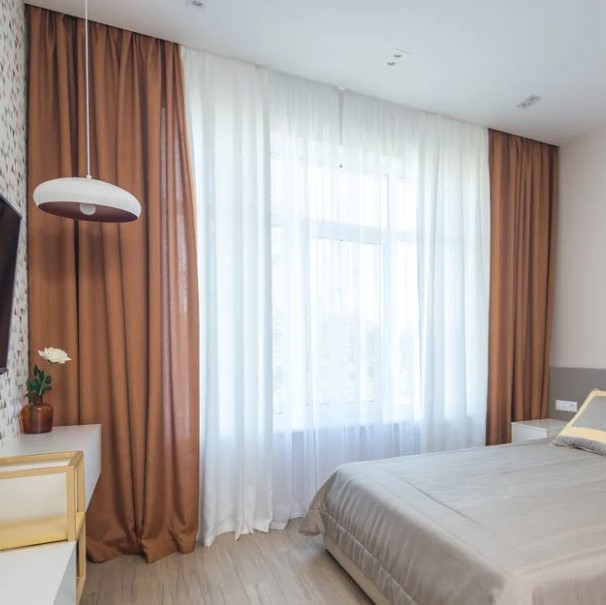
What colour curtains for a bedroom?
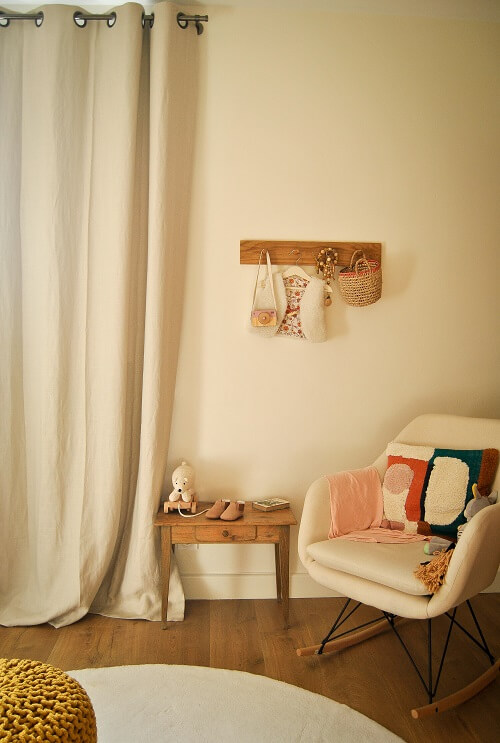
In principle, it’s best to avoid choosing a colour that’s too garish or bright for a bedroom, as it should encourage sleep and relaxation. However, since bedroom walls are often painted in light or neutral colours, it can be a good idea to add some energy to the décor with stronger colours. So, Curry yellow will work just as well as Sage green or washed linen Ficelle. Red is known for being an energising colour, so it’s not recommended for the bedroom… unless it’s your favourite!
Bear in mind, though, that you’ll spend mornings in this room darkened by drawn curtains, and it will take on the shade of those curtains on sunny days. Would you prefer your bedroom to be green, blue, pink or orange? Curtains are not just a decorative element, they also create a unique atmosphere.
What colour for living room curtains?
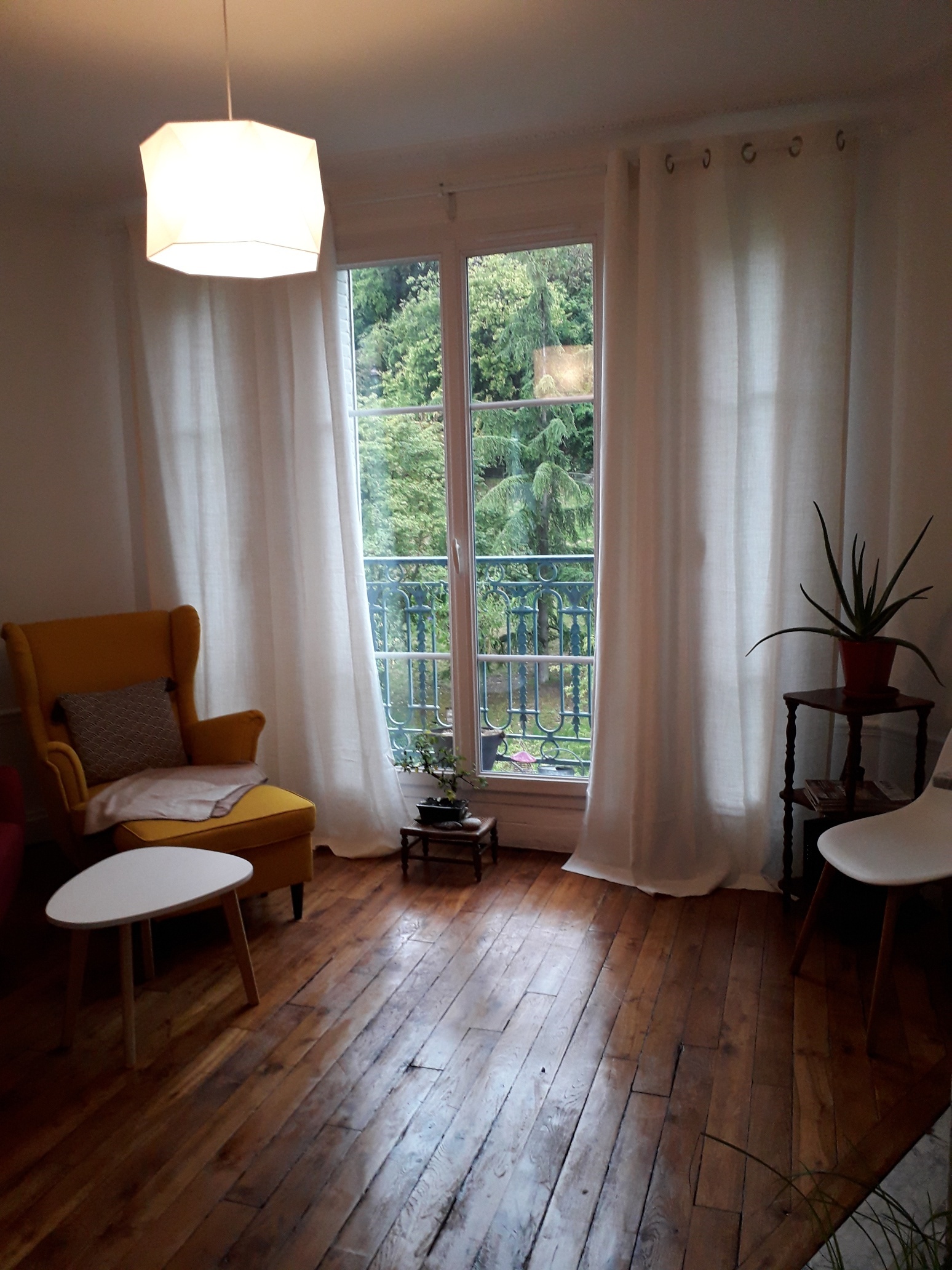
The living room is the main living space, so it’s important to feel comfortable and enjoy the colours you’re surrounded by. The choice of curtain colour depends on the atmosphere you want to create. For example, a natural interior with organic materials such as concrete or wood is best suited to neutral curtain colours such as Marine, Ivory or Mouse grey. For an interior that lacks energy, choose curtains in brighter, more striking colours such as Fig or Ochre. Interiors designed for rest and relaxation will benefit from colours close to blue and grey, which are known to be calming. In any case, make sure to dress your window frames with curtains in the same colour to maintain a sense of harmony.
What colour for room divider curtains?
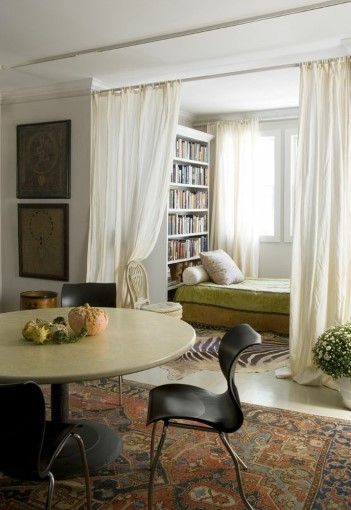
Room divider curtains are used to divide a room into several parts, for example to separate two sleeping areas in a bedroom, or to create a study area or a sleeping area in a loft. If the space is quite small, it’s best to choose a neutral shade of curtain so as not to overload the room’s already busy aesthetic. If it’s a large space, on the other hand, it’s better to mark the division clearly with stronger colours, which will give the space character within this large area.
What colour for wardrobe curtains?
In general, if you opt for a wardrobe curtain, it’s because you want to conceal this area and blend it in with the rest of the décor. If so, choose neutral, discreet tones that match the rest of the room’s colour scheme. Ivory, Cinnamon or Nacre are all ideal colours for a wardrobe.
Curtain headings
When it comes to curtain headings, you have several options. If your furniture has a slightly vintage or rustic feel, Flemish headings are ideal: one or two pleats, on a pole or a track – make your choice according to your preferences!
If, on the other hand, your interior is modern and designer, choose eyelets. On Embrin, you can choose from several colours: gunmetal, nickel, antique copper, brass, bronze or matt black. Finally, if you can’t decide, you can simply choose hidden tabs: neither the heading nor the pole is visible, as they are concealed behind the fabric!
Note that large eyelets sold in shops generally have a diameter of 40 mm, compared to 9 mm for small ones. The choice of pole diameter, or conversely of eyelets, is important for the finish!
Curtain dimensions
Choosing curtains is a real challenge: once you’ve chosen the colour, there’s still the step of calculating the dimensions! Don’t worry, Embrin will guide you straight to your ideal configuration.
What length should you choose for your curtains?
There are three main schools of thought when it comes to curtain length.
Half-height curtains
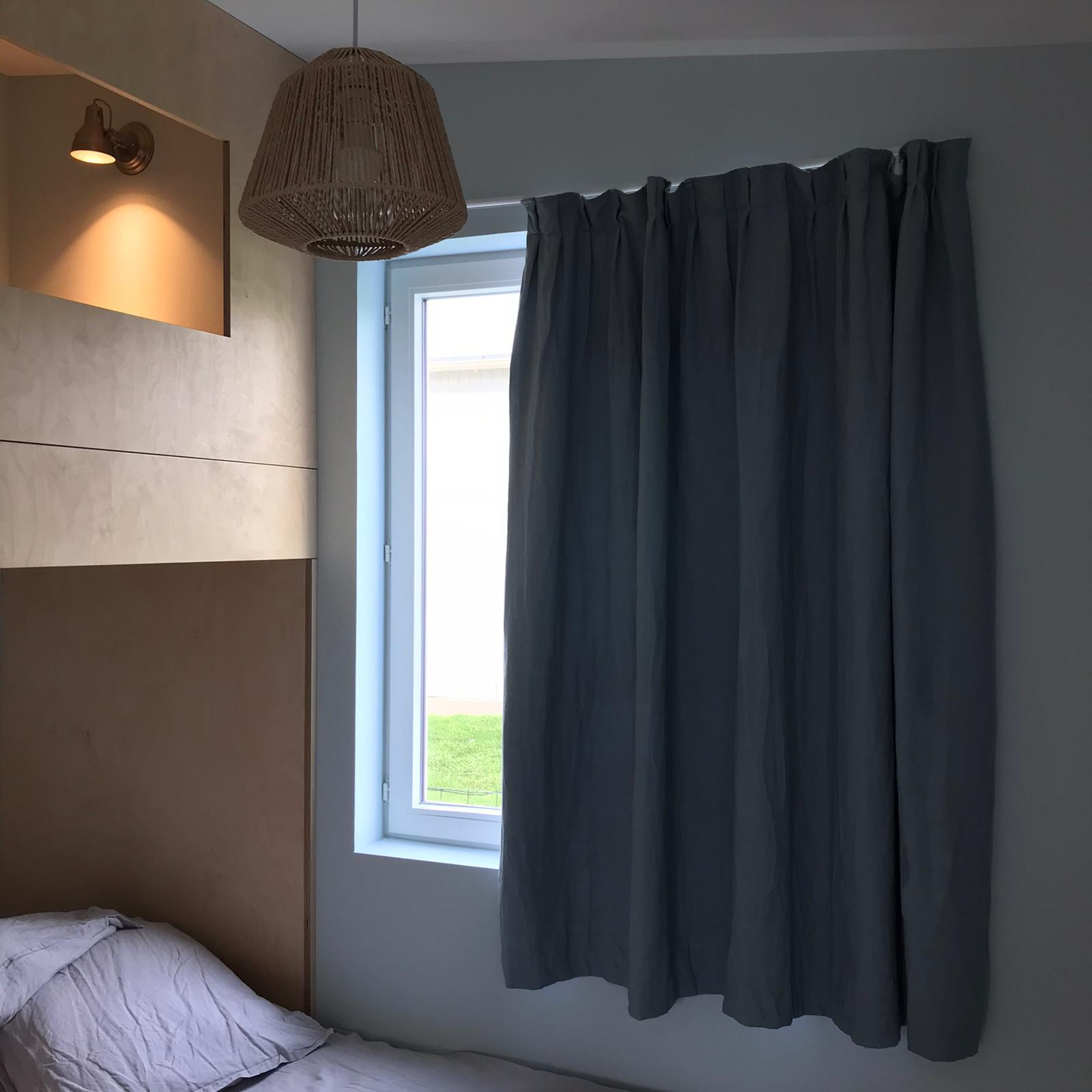
Suitable for classic window frames, half-height curtains dress the wall without overloading the décor.
They frame the window perfectly and do not extend much below it. Allow 30 cm extra below the edge of the window to create a harmonious drape.
Half-height curtains are particularly suitable for rooms where a piece of furniture is placed under the window.
The perfect drop
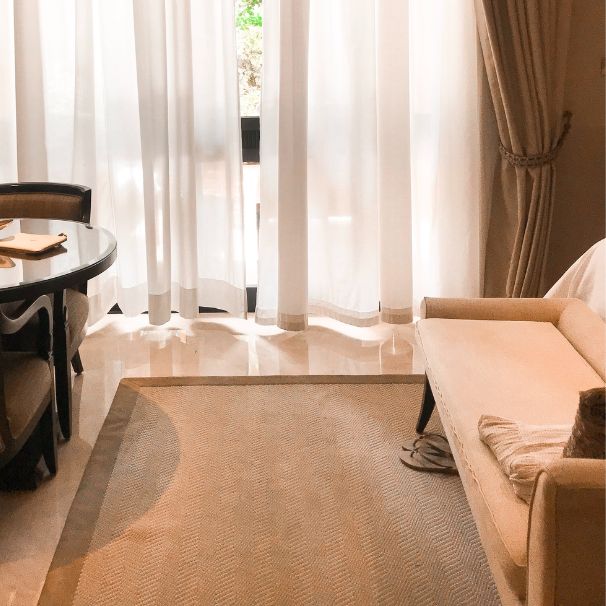
Suitable for classic windows, French windows and patio doors, curtains with a perfect or straight drop stop just above the floor, 5 cm or 1 cm from the ground depending on preference.
Having the hem 5 cm above the floor prevents it from getting dirty too quickly from dust and other dirt on the floor. A 1 cm hem creates the impression of extra height, while a 5 cm hem tends to reduce the ceiling height.
The breaking drop
Often chosen for its dramatic and elegant look, the breaking drop allows for an extra 5 cm, forming a fold at the bottom of the curtain.
This type of drop has the disadvantage of collecting dust and getting dirty quickly. However, it gives a room a unique style and is more reminiscent of interior design magazines.
This configuration is often found in living rooms and bedrooms.
.png)
What width should you choose for your curtains?
It is generally considered that the width of the curtains should be double that of the curtain pole. So, the required width depends on the number of panels you plan to hang on your curtain pole. If the pole is 1 metre long, then a single curtain should be about 2 metres wide, or two curtains together should total 2 metres in width. Embrin has created an online curtain configurator that automatically calculates the ideal curtain width according to the pole and the number of panels required. Simply enter the length of your pole in cm, and you’re all set.
The ratio of the curtain width to the pole width is called the fullness. At Embrin, the fullness used for making your curtains ranges from 1.6 to 2, which corresponds to the width of the curtains, taking the pleats into account. This fullness is adjusted depending on the finish (eyelets, single or double pleats, or flat pleats). This fullness calculator also ensures attractive waves whether the curtains are open or closed, and the right number of pleats.
Curtain linings
There are three options when it comes to curtain linings.
Blackout linings
If your curtains are to be installed in a bedroom, choose a blackout lining, designed to block out the light. Likewise, if it’s a rather cold room or has single glazing, blackout curtains are ideal. They act as thermal linings: they retain heat in winter and keep the room cool in summer.
Satinette linings
If your curtains are intended to dress your living room or study, a simple satinette lining will suffice. Thanks to its lightness, it allows light to pass through the fabric without risking fading from moonlight. However, this type of lining lets both cold and heat through, and is better suited to double glazing.
Unlined curtains
Finally, you are free to choose no lining at all! Your curtains will be lighter and let light through, as well as cold and heat. However, they may lose their lovely colour over the years, even though our linen models tend to retain colour better than cotton or synthetic fabric.