
From Seed to Fibre
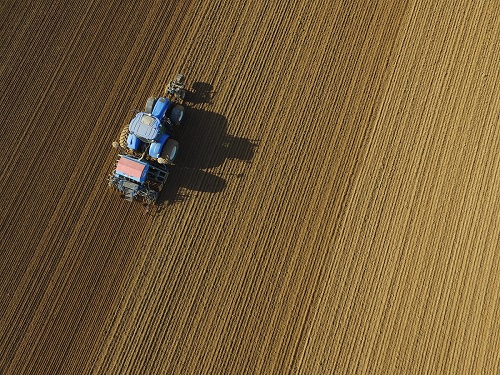
Sowing
Flax seed is sown in spring, between 15 March and 15 April, when the soil begins to warm up. After finely preparing the soil, we sow around 2,000 tiny flax seeds per m²… that's 20 million to produce one hectare of flax.
We select from around twenty spring textile flax varieties such as Alizée, Aramis, Eden, Bolchoï… choosing those best suited to our terroir. All the seeds used are certified by the State for their health quality and germination capacity.
To obtain quality flax, the crop only returns to the same plot every 6 years.
Growth
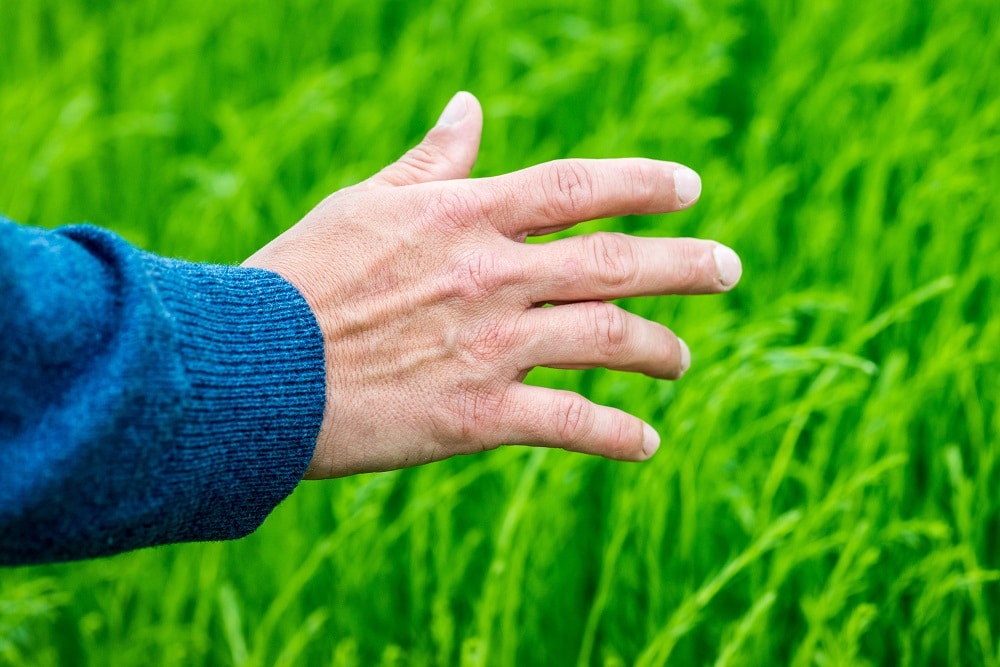
A mild, regularly rainy spring ensures the growth of flax. It takes 100 days for the plant to reach maturity. At this stage, each stem will measure 1 metre and have around a hundred leaves. Good soil quality should allow the flax to develop its roots to a depth of at least 1 metre.
Although not certified organic, our flax is an ecological crop. During its 100 days of growth, one hectare of flax will capture 3.7 tonnes of CO2. Its cultivation does not require irrigation; rainwater is sufficient for its vegetative cycle. On a European scale, this saves 650 million m³ of water per year compared to an equivalent area of cotton. Finally, the soil's resources are enough to nourish the plant, which has a low nitrogen requirement.
Flowering
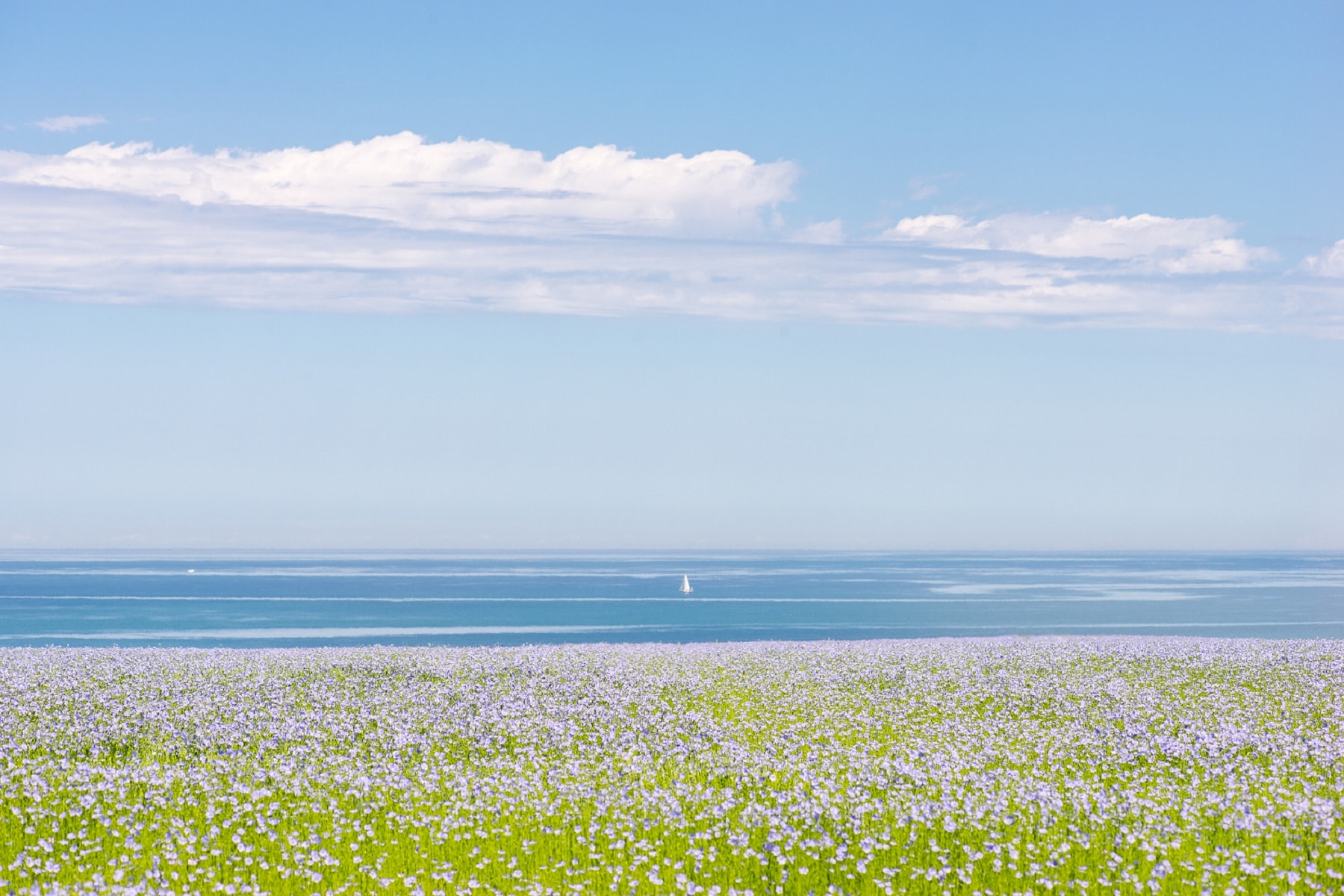
In mid-June, the flax fields take on a lovely blue hue. This is the flowering period. This fleeting spectacle is reserved for early risers… as the small blue flowers are only visible for a few hours in the morning. But the flowering of a plot is staggered over about 2 weeks, during which new little flowers appear each morning. The fibre has then reached its maximum height and the seed capsules will begin to form.
These blue expanses have inspired many artists, notably Louis Aragon, who wrote:
A great field of blue flax, so astonishing. Always discovering a pure, deep water. Miraculously covered by its cloak. Is it a lake or the sea, the shoulders of the world, Guess…
Pulling
In July, the flax reaches maturity, a stage marked by the yellowing of the stem, leaf fall, and the browning of the capsule containing the seeds. This is the time to pull the flax from the soil mechanically, using a specific machine. The whole plant must be extracted from the soil, as the textile fibre runs from the roots to the top of the stem.
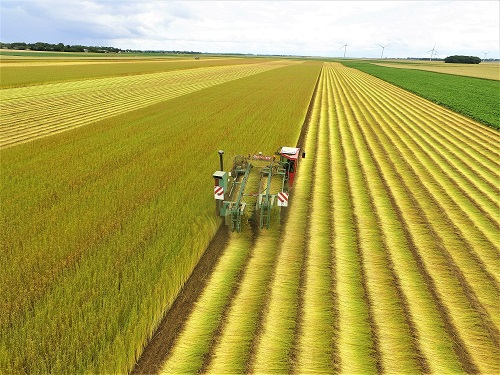
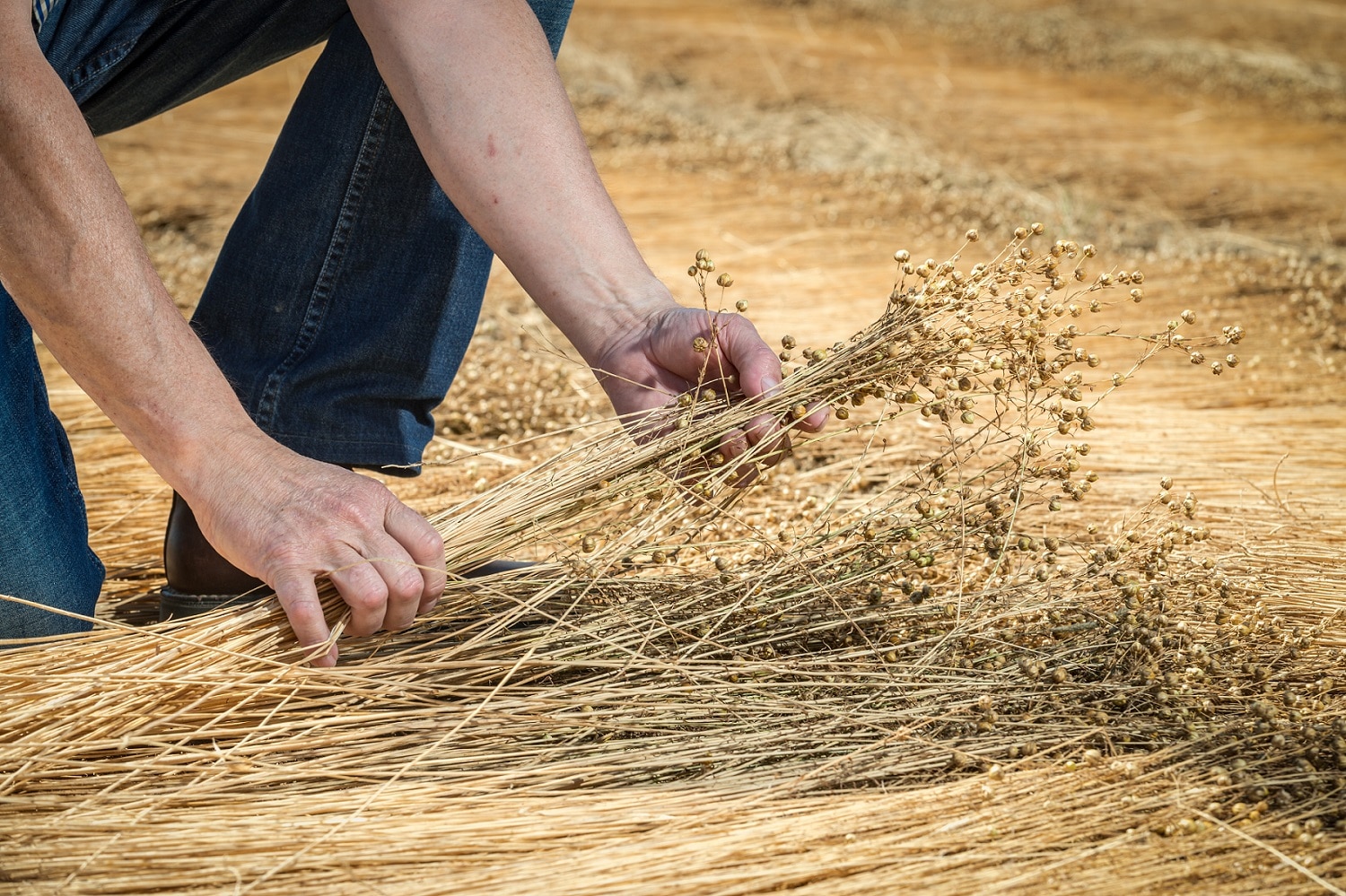
Once pulled, the flax is laid on the ground in regular, evenly thick windrows. As soon as they are on the ground, the flax stems need a few days of sun to dry before beginning their natural retting process.
Retting
Retting is the first stage in transforming the flax plant. It is triggered by alternating rain and sun, conditions necessary for the development of micro-organisms and bacteria naturally present in the soil onto the flax.
Once on the flax, these micro-organisms break down the pectin in the stem, thus separating the textile fibres from the woody part of the plant. This transformation is therefore entirely natural.
For even retting, the flax must be turned regularly. Here again, it is all the know-how of the flax grower that will best judge the right moment to do so.
Each year, depending on the weather conditions during the retting phase, the shade of the flax will be different, thus producing a new vintage.
Harvest
After several weeks on the ground, when retting has reached an optimal quality level, the flax is ready to be collected.
We then press the flax straw into round bales, each tied with flax twine. One hectare of flax allows for 30 bales, which are immediately stored under cover awaiting scutching. Each bale weighs around 250 kg and contains about 25% of so-called “long fibre” textile fibre.