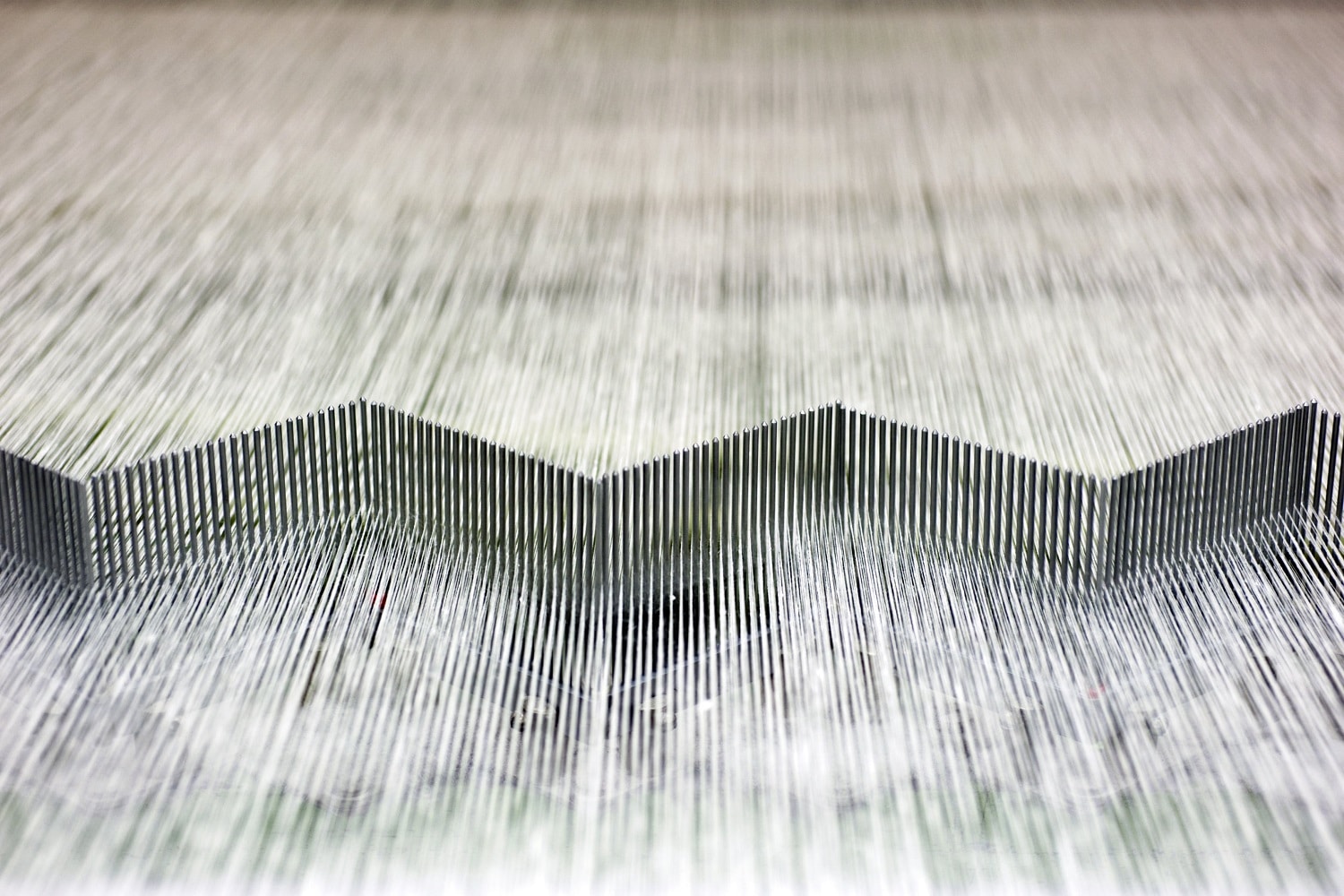
From Fibre to Collection
Scutching
Once harvested, our flax is delivered to the local cooperative Terre de Lin for scutching. Scutching is a mechanical operation that involves extracting the fibre from the bark of the stem. The successive steps are breaking, stretching, crushing, and beating.
The plant produces no waste, as the scutching residues called shives are used to make boards or used as bedding for horses.
The fibres obtained are classified into two categories: long fibres called line flax and short fibres called tow.
At EMBRIN, we guarantee that all our products are made from first-choice, noble and durable long fibres, scutched by our partner Terre de Lin.
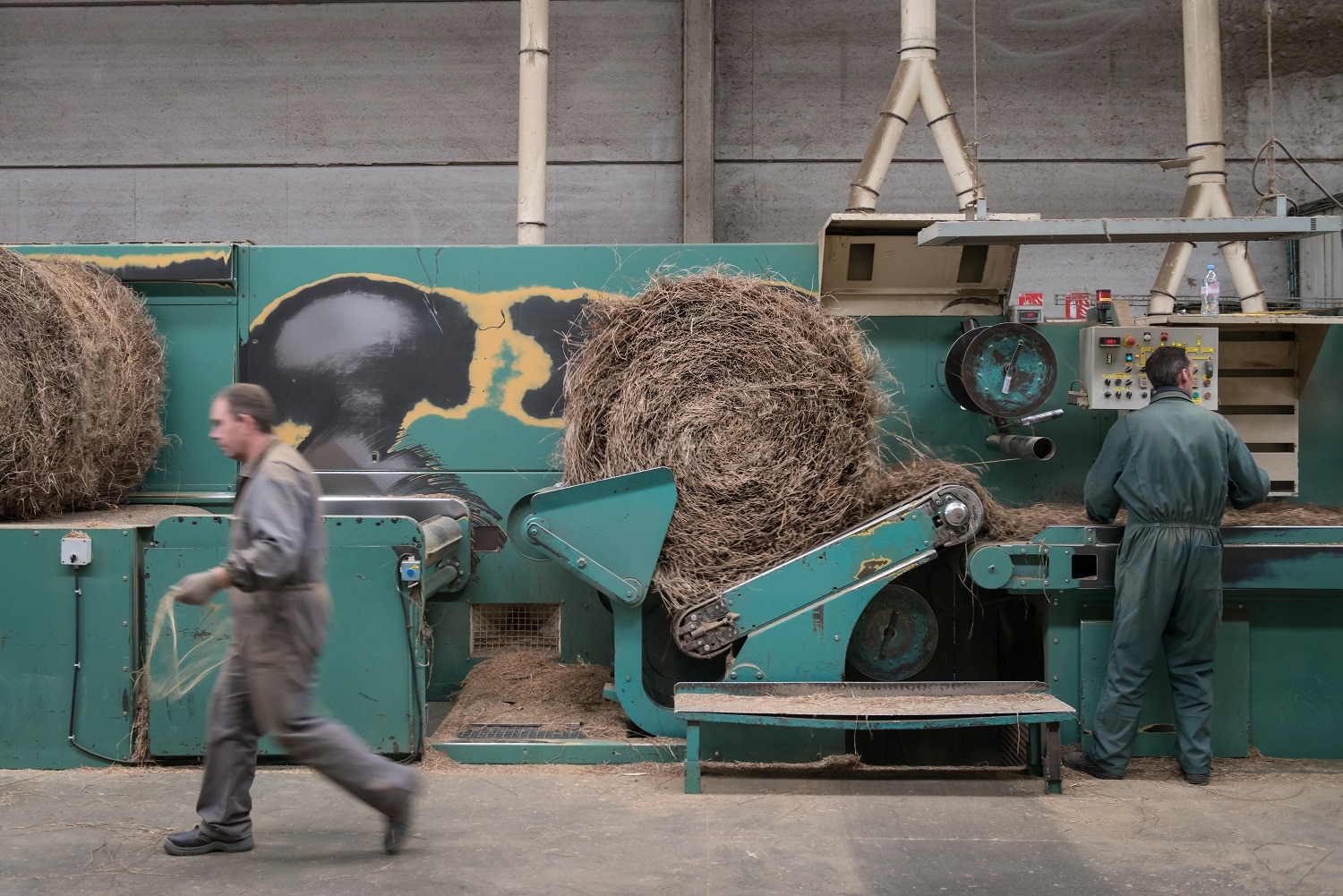
Terre de Lin: A Committed Partner
Located a few kilometres from the farm, the Terre de Lin cooperative is a major player in the textile flax sector. Transforming 13,000 hectares of flax each year, Terre de Lin accounts for 15% of the world's flax production. The cooperative brings together 600 Norman farmers and employs 220 people across 6 production sites in Normandy.
Terre de Lin is the only structure that encompasses all the upstream activities of the textile flax sector, namely the creation of new flax varieties, seed production, flax scutching and combing, as well as the valorisation of flax shives.
We are proud to partner with this local cooperative, with whom we share many common values.
Combing
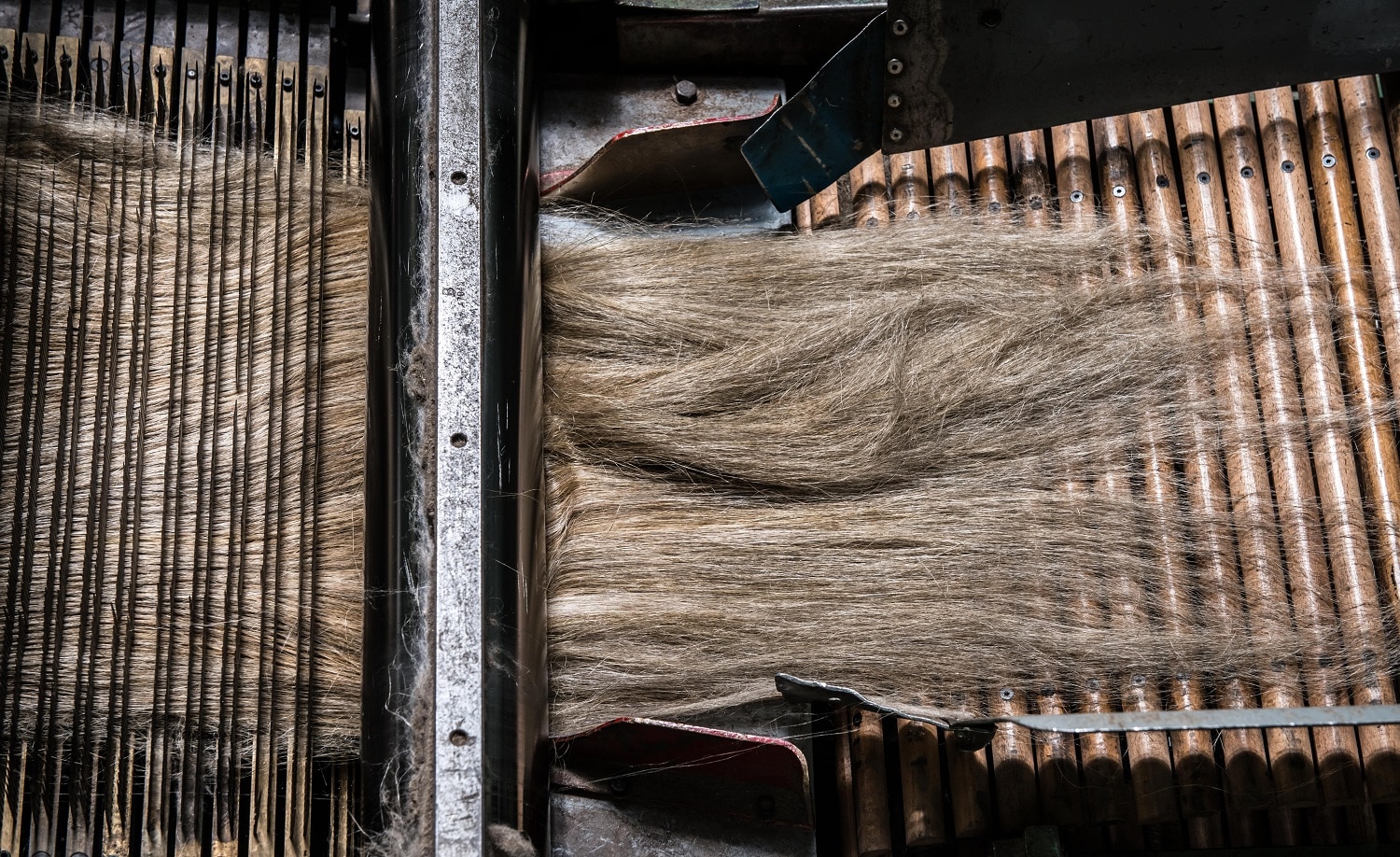
The process known as combing aims to detangle the line flax. The fibres are gradually separated from each other by passing through increasingly fine combs. At the end of the last comb, the fibres are silky and parallelised. They are joined together to form a long ribbon.
This step is also carried out by the Terre de Lin cooperative, exclusively on premium quality flax fibres, which will be used for the making of our collection.
Spinning
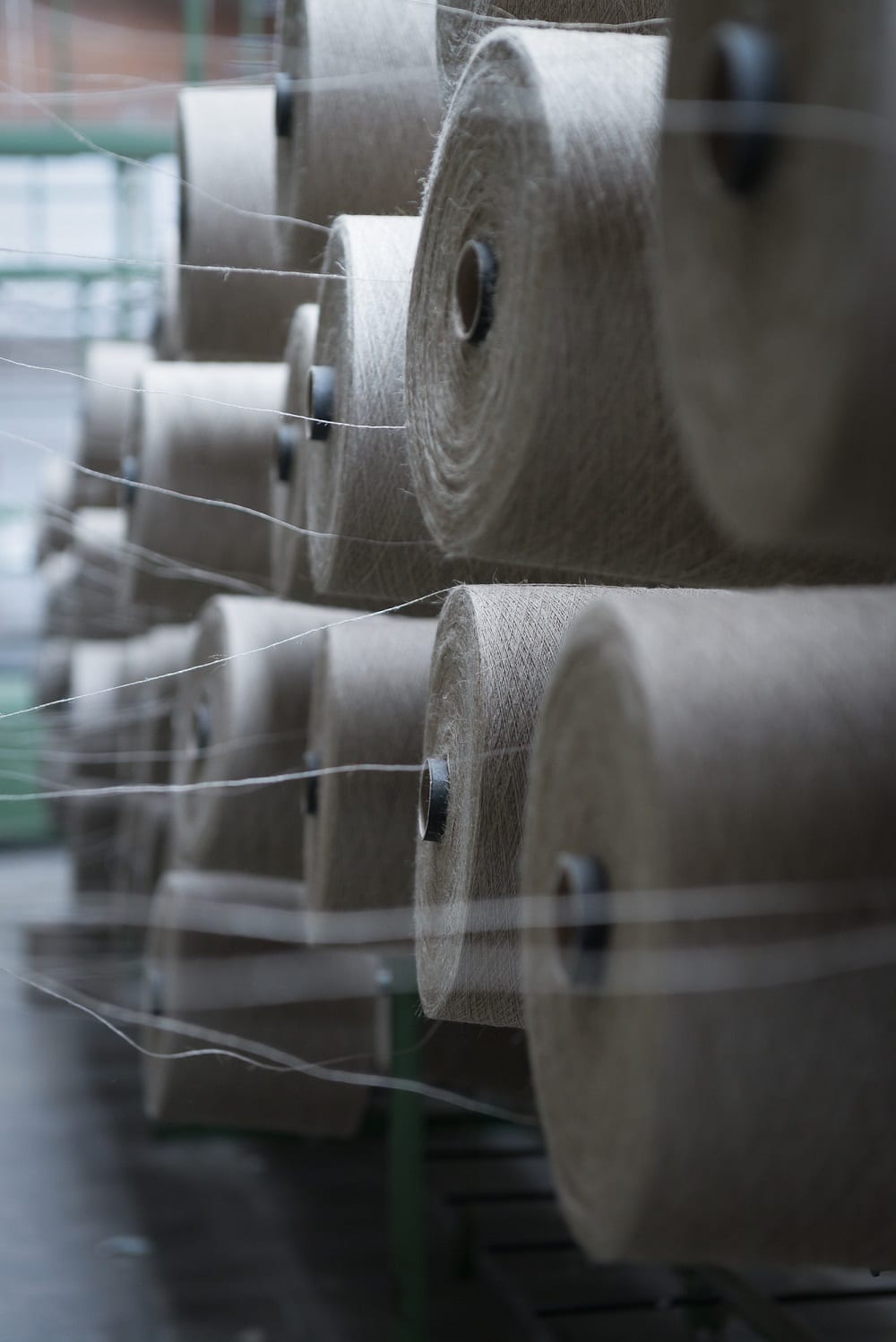
This involves transforming the flax fibre into yarn by stretching and twisting it. This step is performed "wet", as the flax sliver is soaked in warm water to make it more flexible. This spinning method produces the finest and most resistant yarns, used for the making of high-end products. The EMBRIN collection is made exclusively from these yarns.
One hectare of flax can produce 20,000 kilometres of yarn... so two hectares are enough to circle the Earth!
At a time when 80% of flax is spun in Asia, at EMBRIN we have chosen to work with two European spinners, Linificio and Safilin, to perform the spinning of our flax. Both are renowned for producing the finest flax yarns and also hold the "Oeko-Tex" and "Masters of Linen" labels, guaranteeing the quality of their work and their environmental commitment.
Weaving & Making
It is in Normandy, at the Château Farm, where we design and create our entire collections. Each model is unique, each model belongs to you.
The weaving of our fabrics is mostly done in France and Italy, as well as with other European partners who possess unique craftsmanship. These partners also manage the dyeing of our fabrics in compliance with REACH regulations and according to the Oeko-Tex certification to ensure no harmful substances are used in the dyes.
Each EMBRIN partner is rigorously selected, both for the quality of their work and their eco-responsible commitment, guaranteed by the certifications we require.
The fabrics are then centralised at our farm in Normandy. This is where all our items are made, by hand, by seamstresses who are as meticulous as they are passionate. Our workshop has been set up in the farm's old barns.
As a family of flax producers, our knowledge of the sector and this noble but particularly demanding material allows us to best understand all the stages of production and transformation.
Committed to our values and our rural roots, we place quality, ethics, and responsibility at the heart of all our decisions.