Roman blinds: buying guide
The linen Roman blind is the ideal companion for bringing a natural, bio-based decorative touch to your home. The Embrin configurator offers you many options to create the model that will enhance your windows. Here is our buying guide.
6 questions to ask yourself to configure your ideal Roman blind
Choosing the colour of your Roman blind
Embrin offers a softened pure linen with a weight of 310g/m² for the making of its blinds. This makes it a thick, quality fabric that allows light to pass through completely transparently. Once these considerations are made, it is time to select the colour that will dress your walls.
To appreciate the depth and impact of each of the colours offered by Embrin for its linen Roman blinds, we suggest you order a swatches set. Neutral colours are often favoured for modern interiors, but bolder colours should not be underestimated, as they can bring character to a room.
Here is our advice for choosing the colour of your Roman blinds, room by room:
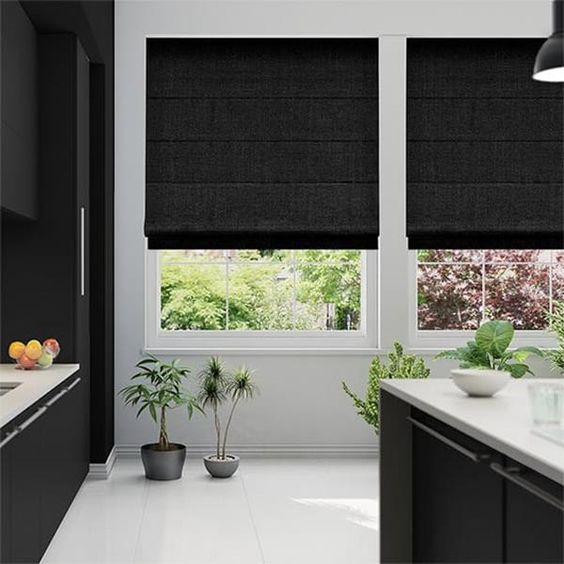
For a kitchen
Neutral colours such as caviar grey, optic white or lead grey guarantee a clean and contemporary style for modern kitchens.
Rustic kitchens, on the other hand, can embrace colour to bring a touch of cheerfulness to the space. Warm, natural shades such as hop yellow, brick red or moss green are perfectly suited here.
For a living or sitting room
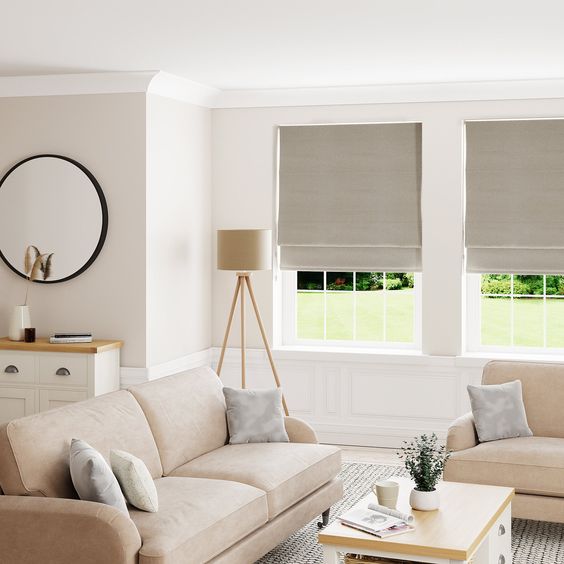
A small, intimate and cosy room will show its best side with a blind matched to the dominant colours of the existing furniture and interior fabrics (for example, ultramarine blue is perfect for a nautical-style room, while brick red fits well in a space with warm tones). Large living areas with patio doors to the outside pair beautifully with light shades that blend discreetly into the decor without weighing down the space, such as cream or pebble grey.
For a bedroom
In the bedroom, all colours are allowed, as long as your blinds are properly blackout. However, it is best to avoid red and yellow, as these colours are too stimulating. Blue and violet are the most calming colours, recommended for sleep.
For a bathroom
The bathroom is a living space where we spend less time compared to the bedroom or living room; therefore, you can choose a colour with character. In recent years, the trend has been towards very light colours such as optic white or beige, but also earthy tones like moss green, pine green, lichen green, string or clay grey.
How to make a space feel larger or cosier with the colour of your Roman blinds?
If you find the room too small and want to create a sense of depth, choose a light shade. If, on the contrary, you find the room large and empty and want to add a touch of cosiness, more personalised colours will be your best friends. However, do make sure to coordinate the rest of your interior fabrics with the colour of your blinds.
Choosing the dimensions of your Roman blind
Start by measuring the window where you want to hang your blind. This will give you the minimum area to cover. Regarding the margin between the window frame and the edges of the blind, there are several approaches, each offering a different style to the room.
Indeed, the choice of the proportion of your blinds in relation to the size of your windows can play a role in the overall style of your interior decoration.
- Blinds the size of the window: this is the “useful” size, which has a pragmatic function, ideal for the kitchen or bathroom, for example.
- Blinds larger than the window: this choice gives a sense of opulence and can make the window appear larger than it actually is. It is the ideal choice if you want to give the room a sense of space.
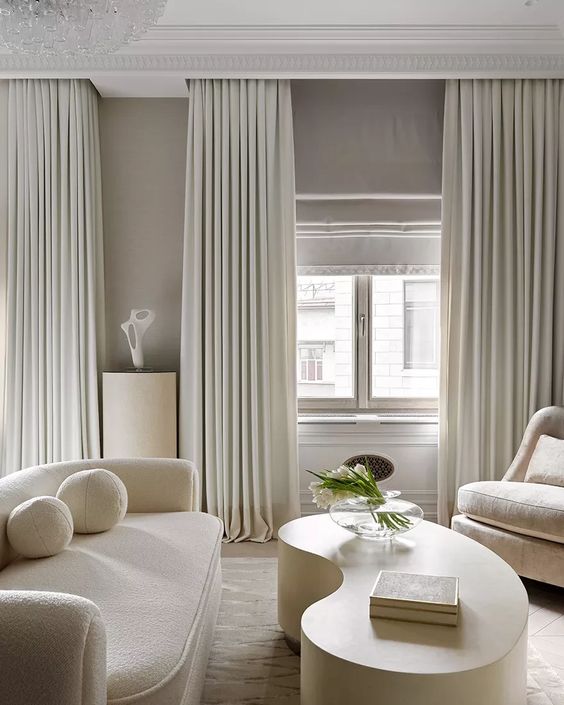
A larger blind adds an extra touch of sophistication to the room, especially when paired with voiles or curtains hung on either side, chosen in a matching shade (for example, a string blind and lichen green voiles).
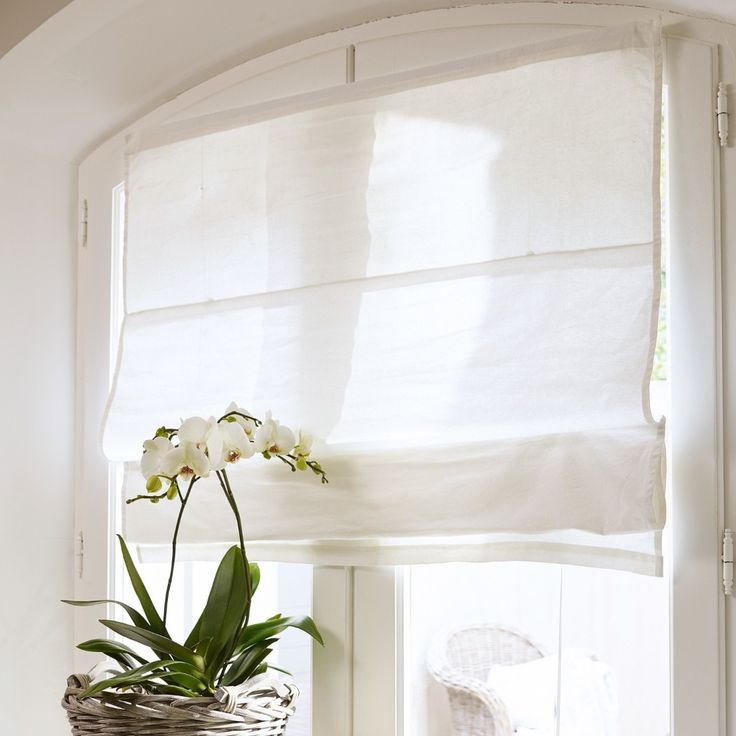
- Blinds smaller than the window: it is possible to choose a Roman blind matching the size of the glass pane, without taking the window frame into account. This is a rather rare choice, but it gives a vintage character to the interior decoration.
It is only suitable for rustic interiors with wooden window frames of particular charm, and not for contemporary villas.
Choosing the opacity of your Roman blind
Opacity is an important factor when buying blinds. For bedrooms, it contributes to restorative, quality sleep. But it also plays a part in interior decoration: depending on the different levels of opacity of your blinds, you will create different atmospheres.
- For a soft, filtered atmosphere: it is best to choose a transparent, lightly opaque blind that will let the light through and give the room an ambient colour. For example, a brick red or curry yellow blind will give the room a warm atmosphere thanks to the tinted light it lets through.
On the other hand, a peacock blue or ultramarine blue blind will create a fresher atmosphere, making these shades ideal for a bathroom or kitchen, for example.
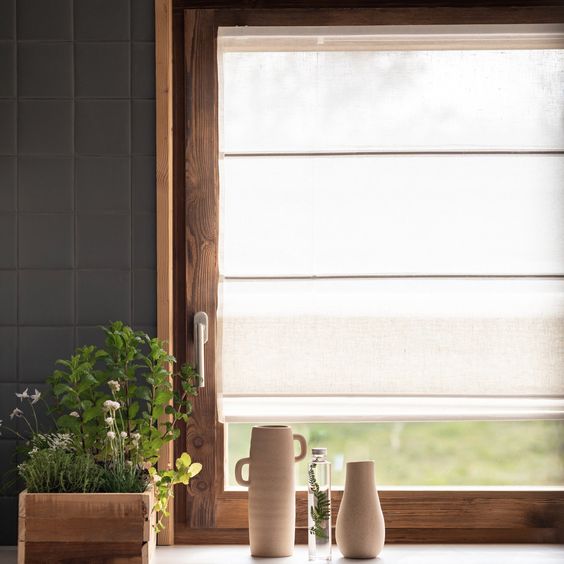
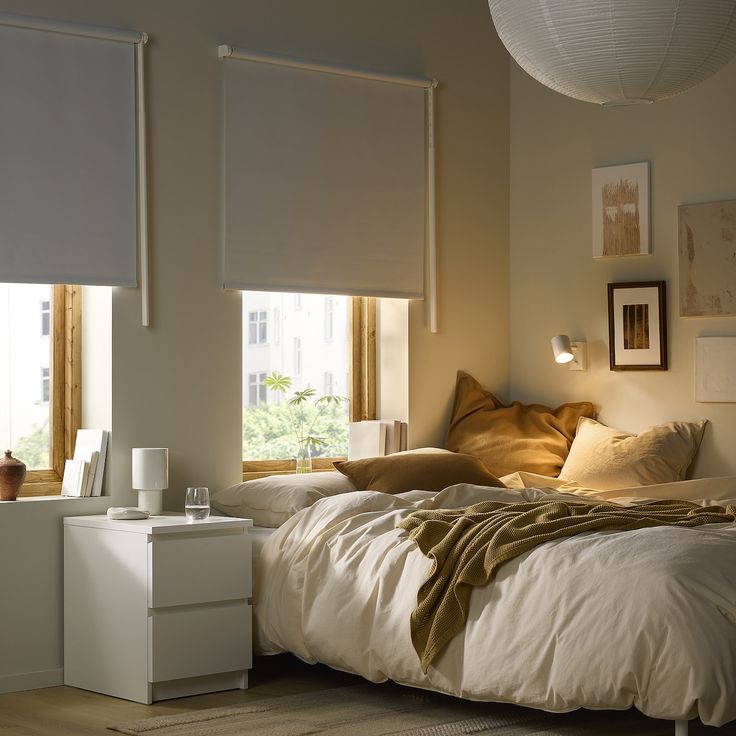
- For a restful atmosphere: it is best to choose blinds with blackout lining that do not let light through. These are recommended for bedrooms, but also for TV lounges or offices where sunlight can affect screen visibility.
Good to know: The satinette lining protects the blind, as well as your interior, from ultraviolet rays generated by sunlight, while still letting light in. This is an important factor, as it prevents your furniture and fabrics from fading. The blackout lining also protects your belongings, but does not let any light through.
Perfection is in the details
We know that a well-designed interior is all about the details, dozens of carefully considered, thoughtful touches. You can absolutely personalise your Roman blinds. Here are a few ideas:
- customise the cord: with a wrapped ribbon, a tassel at the end of the cord, or even a bead,
- add borders or trims to the lower part of the blind,
- sew patches onto blinds for children's rooms or have your initials embroidered as a nod to the linen of our grandparents.
Images via Pinterest