Linen, the emblematic fibre of sustainable fashion!
Today, the fashion industry is the second most polluting industry in the world. After oil, it is the production of synthetic fabrics and their transport that have the greatest impact on the environment. Fortunately, in recent years, there has been a growing awareness, with more and more brands and consumers turning towards sustainable, ethical, and environmentally responsible fashion.
Flax is mainly grown in France. Embrin crafts its home linen from washed linen, by hand, in Normandy, in its family-run workshops.
The Environmental Impact of the Textile Industry
The textile industry is the second most polluting in the world, with a significant environmental impact at every stage of production, from fibre cultivation to fabric processing, not forgetting dyeing, which gives fabric its various colours, and the distribution of finished products. Cotton, although natural, is particularly thirsty for water and requires intensive use of pesticides and chemical fertilisers. Its cultivation leads to massive resource consumption, further increasing pressure on ecosystems. In comparison, linen, grown mainly in France, offers a more environmentally friendly alternative. This natural fibre requires neither artificial irrigation nor chemicals, making it a preferred choice for a more ecological approach to fashion.
Fashion is a constantly evolving sector, influenced by trends, but it is entirely possible to adopt a more responsible approach. Choosing natural fabrics means favouring durable fibres that are kind to the environment. By opting for ecological textiles made in France, you support more ethical production and the well-being of workers. Purchasing garments made from quality materials, or using linen by the metre to create your own pieces and accessories, allows for more considered consumption, thus limiting the impact on flora and fauna. Embracing sustainable alternatives means combining style, commitment, and respect for natural resources.
Linen: An Ecological Fibre Suited to Creation
When flax is cultivated, the entire fibre is used: it is a fabric that generates no waste and uses very few resources, especially compared to cotton. Choosing natural materials for textile creation is therefore a first step towards a more ecological and more human-centred approach to fashion.
The price of linen may be higher than that of synthetic fabrics from fast fashion. However, linen remains an exceptional natural textile, valued for its quality, durability, and reduced environmental impact. Embrin’s home linen reflects unique artisanal craftsmanship, handmade and favouring a short supply chain in France. Choosing this ecological fabric means investing in a product that respects the planet, made from natural fibres and ideal for home linen, clothing, or accessories. Available by the metre, it also allows for made-to-measure creations, encouraging responsible and sustainable consumption.
Local processing of fibres is also a key factor in reducing the textile industry’s carbon footprint. By favouring fabrics made in France, from a short supply chain and recognised craftsmanship, it is possible to significantly limit the sector’s environmental impact. Moreover, the sewing and dyeing processes adopted by committed makers are moving towards more respectful practices, with colours derived from natural pigments and non-polluting treatments.
A Strong, Durable Fabric, Made in France!
Linen is a natural fabric of outstanding quality, renowned for its strength while remaining supple and light, making it particularly pleasant to wear. Thanks to the resilience of its fibres, linen garments offer far greater durability than cotton or synthetic textiles. Its thermoregulatory properties and antibacterial qualities make it an ideal material in any season, reducing the need to buy in large quantities and encouraging a more responsible approach to fashion. Linen stands out as an ecological textile of choice for making accessories, home linen, or durable clothing.
In addition to its low water footprint, linen is remarkable for its ability to capture CO2, thus helping to reduce greenhouse gas emissions. Its rapid growth and low impact on soils make it a sustainable material, ideal for the making of clothing, home linen, canvas, and accessories. Unlike petroleum-based synthetic fabrics, linen is entirely biodegradable and recyclable, thus limiting textile waste. Furthermore, its robustness ensures excellent product longevity, reducing the need for frequent renewal and, consequently, overconsumption.
Indeed, linen features in the collections of many brands every season. There is therefore an offering for every occasion: for special events (weddings, christenings, etc.) as well as for everyday life. And above all, this fibre is grown in Western Europe, particularly in France and more specifically in Normandy. This reduces its carbon footprint.
Moreover, flax cultivation cannot be relocated just anywhere in the world, as it requires specific climatic conditions, rich soils, and a particular know-how. Buying Made In France guarantees respect for workers’ rights and the ethical and environmental responsibility of the maker.
Faced with climate challenges and the urgent need for more responsible production, linen stands out as an essential solution for a more sustainable approach to fashion. Its quality, strength, and low environmental impact make it the material of choice for those wishing to combine style with environmental commitment. So, for your next purchases, choose linen! You’ll be making a gesture for the planet, for local employment, and for your own well-being.
Embrin’s Washed Linen Home Linen
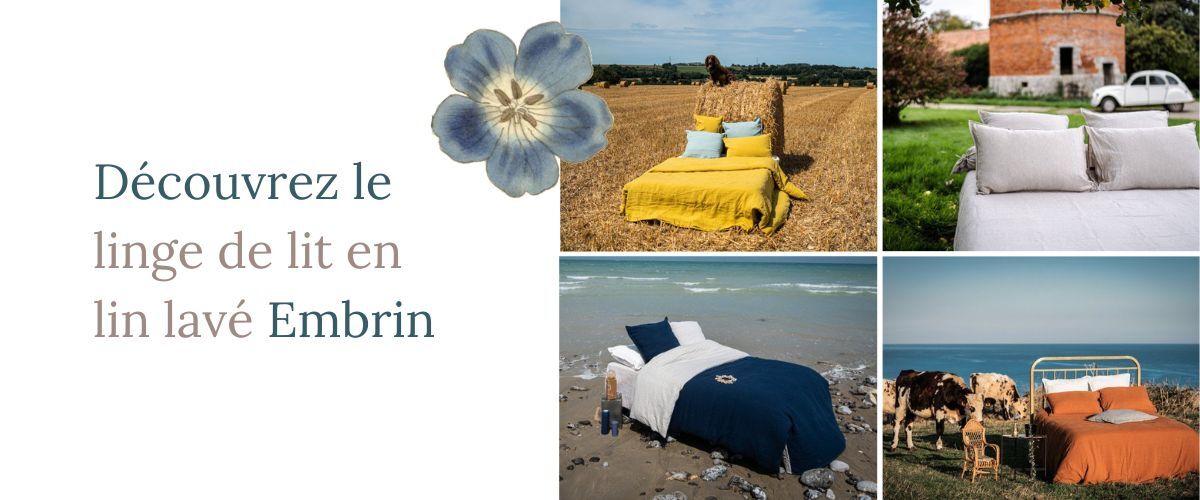
Embrin handcrafts its washed linen home linen in its workshops in France, guaranteeing a textile of the highest quality. Grown in Normandy in an eco-responsible manner, this natural linen offers fibres that are both soft, resilient, and durable. Thanks to its artisanal expertise, Embrin creates warm and elegant products, perfect for home linen as well as for the making of clothing and accessories. As an ideal alternative to cotton, linen is a responsible choice, favouring ecological materials and a local, controlled production chain.
If you wish to leave synthetic materials behind in favour of a natural, quality fabric, linen is an excellent choice for your home. Used as bed linen, it offers incomparable comfort thanks to its breathable fibres, which regulate temperature throughout the year. Antibacterial, hypoallergenic, and durable, linen is distinguished by its resistance far superior to that of cotton or synthetic textiles. Available in a wide range of colours, especially in washed linen, it brings an elegant and authentic touch to your interior. Made in France by Embrin, this ecological textile is also available by the metre, allowing you to create accessories or even unique garments, all while supporting responsible and sustainable consumption.
Discover washed linen fabric for the whole home, with bed linen, bath linen, and even curtains.