
Linen & Sleep: What Science (and Our Clients) Tell Us
Some habits are passed down through generations, and sleeping in linen sheets could well be one of them.
For years, people have spoken of their coolness in summer, of their softness that develops wash after wash, or of that unique sensation they offer, so very different from cotton bed linen. Many of our clients write to us after only a few nights. They describe more peaceful sleep, fewer awakenings due to heat, and the pleasure of returning to their bed.
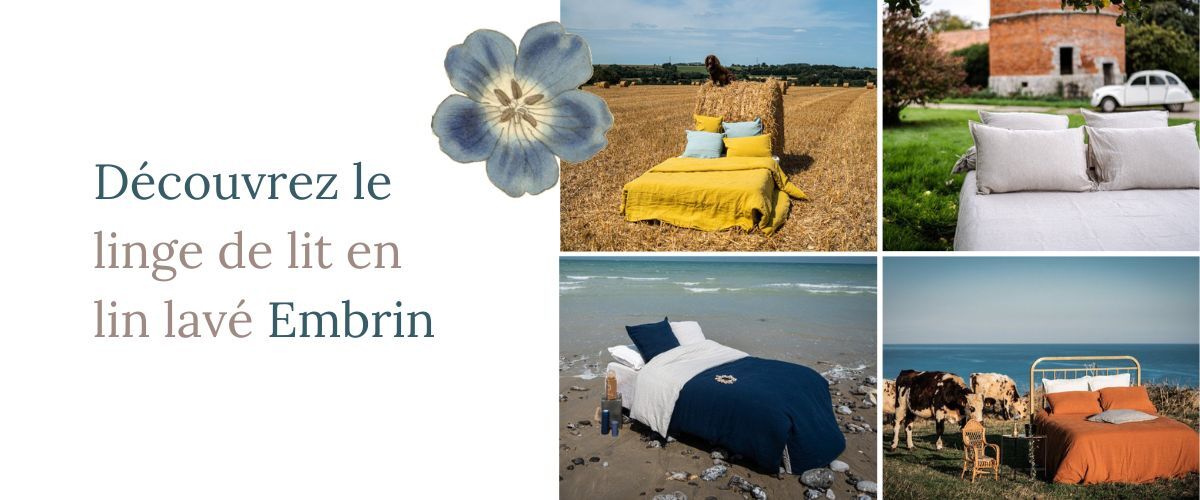 For a long time, we thought of this feedback as simply personal impressions.
Then, in 2022, a study conducted by the CETELOR laboratory at the University of Lorraine put numbers to these sensations. The researchers focused on what happens between our skin, bed linen, and body temperature during the night. Their findings were clear: certain natural properties of linen create a particularly sleep-friendly environment.
Sleep begins long before we close our eyes
 When we talk about our nights, we often mention the mattress, the pillow, or the quietness of the bedroom. But what if we also considered the fabric in which we spend nearly a third of our lives?
Researchers agree that bed linen plays a full part in night-time comfort. Throughout the night, our bodies strive to maintain thermal balance. Too hot: we sweat. Too cold: we use energy to warm up. Between the two lies a comfort zone scientists call thermal neutrality. It is within this window that sleep is most stable.
When heat or humidity builds up, awakenings become more frequent and deep sleep phases tend to shorten. The textile enveloping the body therefore plays a more important role than we might imagine.
A fibre that lets the body breathe
 When comparing linen to cotton, viscose, and polyester, researchers observed a striking difference: air circulation.
Linen lets air pass through far more easily than cotton. This ability encourages the release of heat generated during sleep and reduces the feeling of stuffiness that can occur under a duvet when temperatures rise.
This explains why linen so naturally accompanies summer nights.
At Embrin, we have understood this for a long time. This property is part of the fibre itself. Linen grows in the Normandy climate, between humidity, wind and sunshine. This story continues once the fibre is transformed into bed linen.
The detail that changes a night: humidity
We may not realise it, but our bodies release moisture throughout the night. When this humidity remains trapped in the fabric, a sense of discomfort gradually appears. The sheets feel heavier, and heat builds up.
The CETELOR laboratory has shown that linen quickly absorbs this moisture and spreads it over a wider surface, making evaporation easier. It is a subtle, almost invisible property… Yet it is often the difference between a broken night and a night that continues undisturbed.
What our clients share closely matches the study’s conclusions
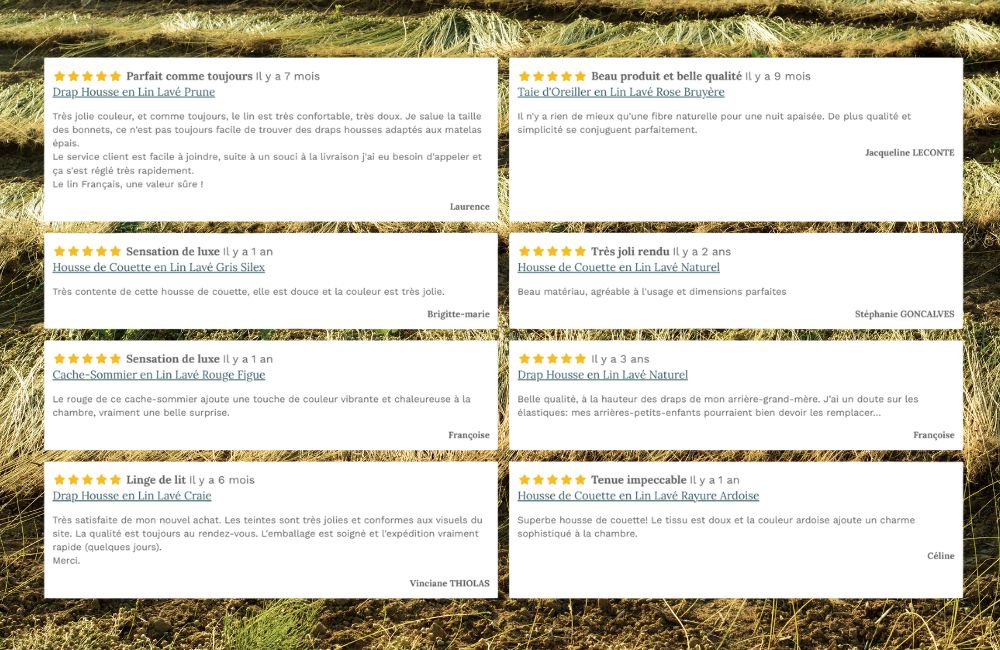 We read each of your reviews and respond with great pleasure.
Your comments often return to the same sensations: a bedroom that feels more pleasant during hot spells, sheets that become softer with every wash, a fabric that works with the body rather than imposing a temperature.
These are not the words of a laboratory. Yet they describe exactly the phenomena observed by the researchers.
Is linen more conducive to quality sleep than cotton?
This is a question we are often asked. The study shows that linen offers better air circulation and more effective moisture management. These differences are particularly relevant for those sensitive to heat or living in regions where summer nights are heavy.
Linen and cotton are not necessarily rivals, but offer different sensations and therefore a different kind of sleep comfort.
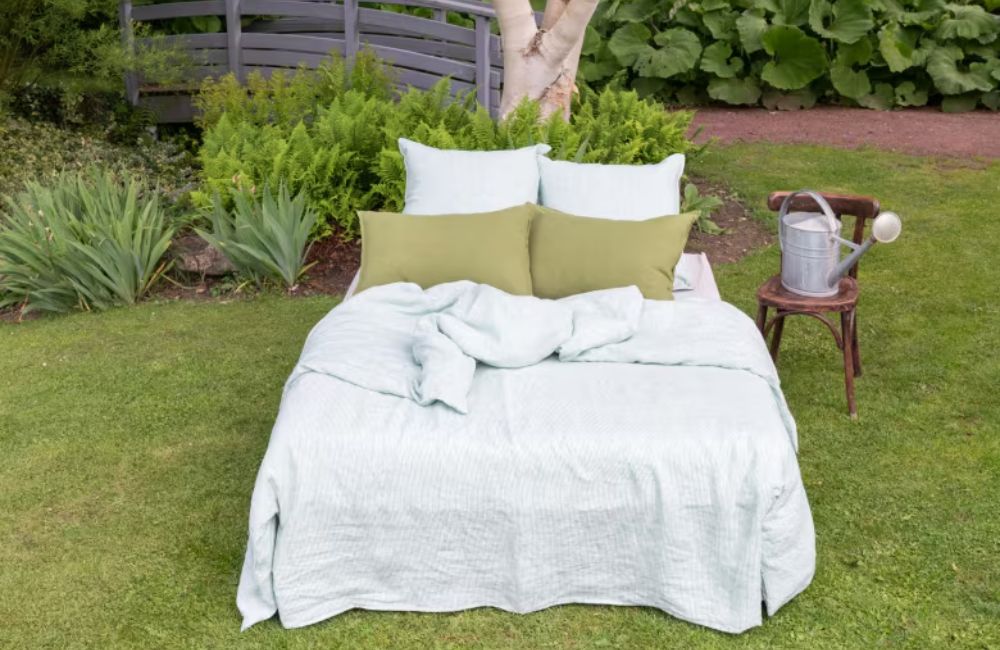 In winter, linen can help maintain a drier, more comfortable microclimate between the body and the duvet, especially if you perspire at night. Contrary to popular belief, linen is not just a ‘cool summer textile’. With the right duvet, it adapts well to changes in body temperature.
Another interesting feature: linen does not generate heat by itself as a highly insulating material might. It is, rather, thermoregulating. In winter, warmth is mainly provided and retained by the duvet; the linen sheet or cover chiefly helps to avoid clamminess or overheating. This is precisely what can make a linen bed pleasant all year round.
Linen is not just for summer. Naturally breathable and able to absorb moisture, it helps maintain a comfortable climate in bed, summer and winter alike. In winter, paired with a suitable duvet, it helps retain warmth without that clammy feeling one can experience during the night.
A living material
Linen has a quality that figures cannot measure: it evolves.
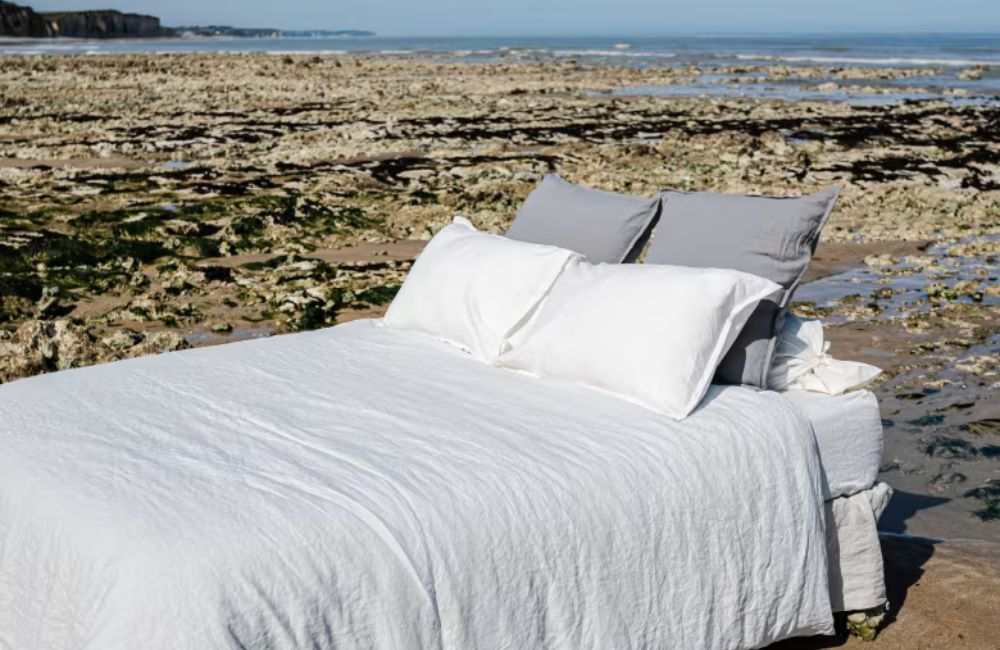 With every wash it becomes a little softer. The fabric develops character, gains in suppleness and comfort, without losing its structure. These are the reasons why many families keep their bed linen for years.
At Embrin, we come from a family of linen growers spanning four generations, so this idea is especially dear to us. We like to imagine that the sheets made today will still be there for breakfast in bed, lazy winter mornings, or summer afternoon naps for years to come.
This is why we commit ourselves every day, and why, in our Normandy workshop, our seamstresses craft your home textiles made-to-measure, piece by piece with skill and precision.
Comfort is not always spectacular
The study conducted by the CETELOR laboratory ultimately reminds us that comfort often arises from several details brought together: a well-ventilated bedroom, the right temperature, quality bedding… and bed linen that naturally meets the body’s needs.
A good night’s sleep does not depend on an innovation or technology, but on a fibre cultivated for centuries.
From the Normandy flax field to the bedroom, linen stands the test of time without losing what makes it unique: an elegant simplicity, designed to accompany both the little and the big moments of everyday life.
Would you like to enjoy peaceful nights in linen home textiles? All that remains is to choose your favourite shade.